


15 essential features every sole trader website should have
By Justyna, founder of Anjuros Development • 11 August 2026
Introduction
A professional website is one of the most valuable investments a sole trader can make. It works around the clock, helping potential customers discover your business, learn about your services and contact you whenever they're ready. Unlike social media, your website is completely under your control and becomes the centre of your online presence.
However, not every business website is designed to generate enquiries. Some look attractive but make it difficult to find important information, while others load slowly or fail to appear in Google search results. A successful website isn't about having the fanciest design - it's about giving customers confidence and making it easy for them to choose you.
In this guide, we'll look at 15 essential features every sole trader website should include. Whether you're planning your first website or replacing an outdated one, these are the features that help businesses attract more enquiries, build trust and grow over time.
1. A clear headline that explains exactly what you do
Visitors should know exactly what your business does within a few seconds of landing on your website. A clear headline immediately tells people what services you provide and helps reassure them they've come to the right place. Confusing slogans might sound clever, but they rarely answer the question customers actually have: "Can this business help me?"
Instead of using generic phrases, explain your trade and the area you cover. For example, 'Electrician in Stafford providing domestic and commercial electrical services' gives visitors far more confidence than a vague slogan. It also helps search engines understand what your business does, improving your local SEO.
2. A mobile-friendly website
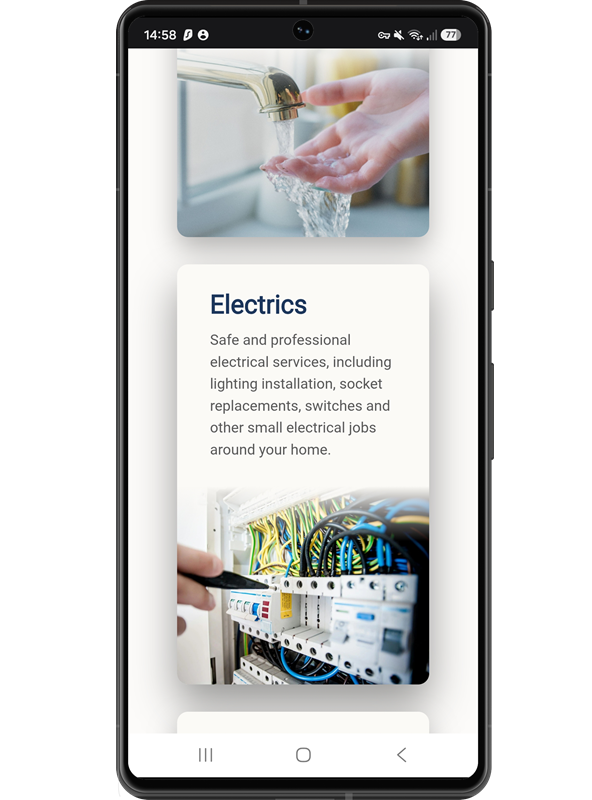
Most customers searching for a local tradesperson are using their phone rather than a desktop computer. They might be looking for an emergency plumber, comparing electricians or requesting a quote while travelling home from work. If your website doesn't work well on mobile devices, you'll lose enquiries before customers even read about your services.
A mobile-friendly website automatically adapts to different screen sizes, making text easy to read, buttons simple to tap and navigation straightforward. Visitors shouldn't need to zoom in, scroll sideways or struggle to find your contact details. A smooth mobile experience creates confidence and makes contacting you much easier.
3. Fast loading pages
Website speed has a direct impact on both customer experience and search engine rankings. People expect pages to load almost instantly, and many will leave if they're left waiting for several seconds. Every visitor who leaves because of a slow website is a potential customer you've lost.
Fast websites also perform better in Google because page speed is one of the many factors search engines consider. Optimised images, clean code and efficient hosting all contribute towards a faster browsing experience. Small improvements in speed can lead to more enquiries and higher conversion rates.
4. Build trust with reviews, qualifications and guarantees
People rarely choose the first business they find online. Instead, they compare several companies before deciding who to contact, looking for signs that a business is reliable and experienced. Your website should answer those questions immediately by showing why customers can trust you.
Customer reviews are one of the strongest trust signals you can display, especially when combined with qualifications, insurance details, guarantees or memberships of recognised trade organisations. These details reassure visitors that they're dealing with a genuine professional.
5. Make it easy for customers to contact you
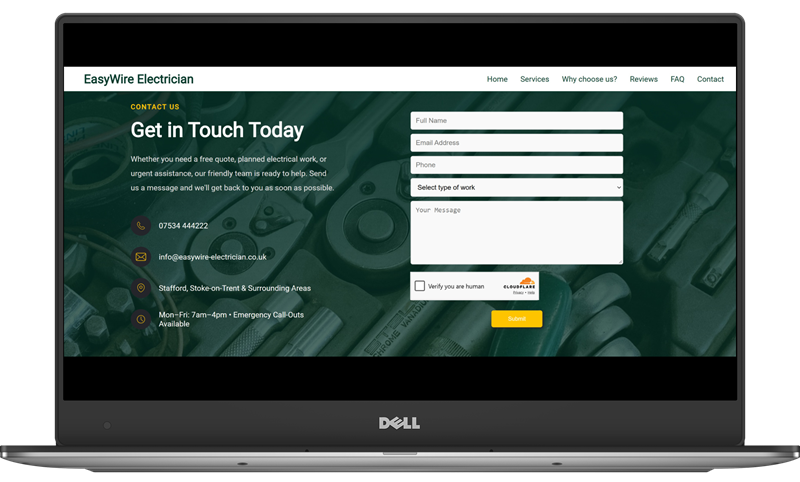
If somebody has decided they want your services, contacting you should take just a few seconds. Unfortunately, many business websites hide their phone number, make visitors fill in long forms, or provide only an email address for contacting them. Every extra step increases the chance that someone will leave without getting in touch.
A good website should make contacting you effortless. Click-to-call buttons, simple contact forms, email links and clear calls to action encourage visitors to take the next step. If you use WhatsApp or another messaging service for your business, that can also be included to suit the way you work.
6. Clearly explain every service you offer
Never assume visitors already know everything your business does. A vague description such as 'Property Services' tells customers very little, whereas separate sections for plumbing, bathroom installations, boiler repairs or emergency call-outs make it much easier for people to understand exactly how you can help.
Clearly describing each service doesn't just help visitors - it also improves your visibility on Google. Search engines understand detailed content much better than generic descriptions, making it easier for your website to appear when someone searches for a specific service in your local area.
7. Show the areas you cover
Most customers search for businesses close to where they live or work. They often include their town or village in their search, typing phrases such as 'electrician in Stafford' or 'plumber near Cannock'. If your website doesn't clearly mention the areas you serve, you're missing valuable opportunities to appear in local search results.
Creating a dedicated section that lists the towns, villages and surrounding areas you cover helps both customers and search engines understand where you work. It also reassures visitors that you regularly provide services in their location, making them more likely to contact you for a quote.
8. Showcase your work with real photos
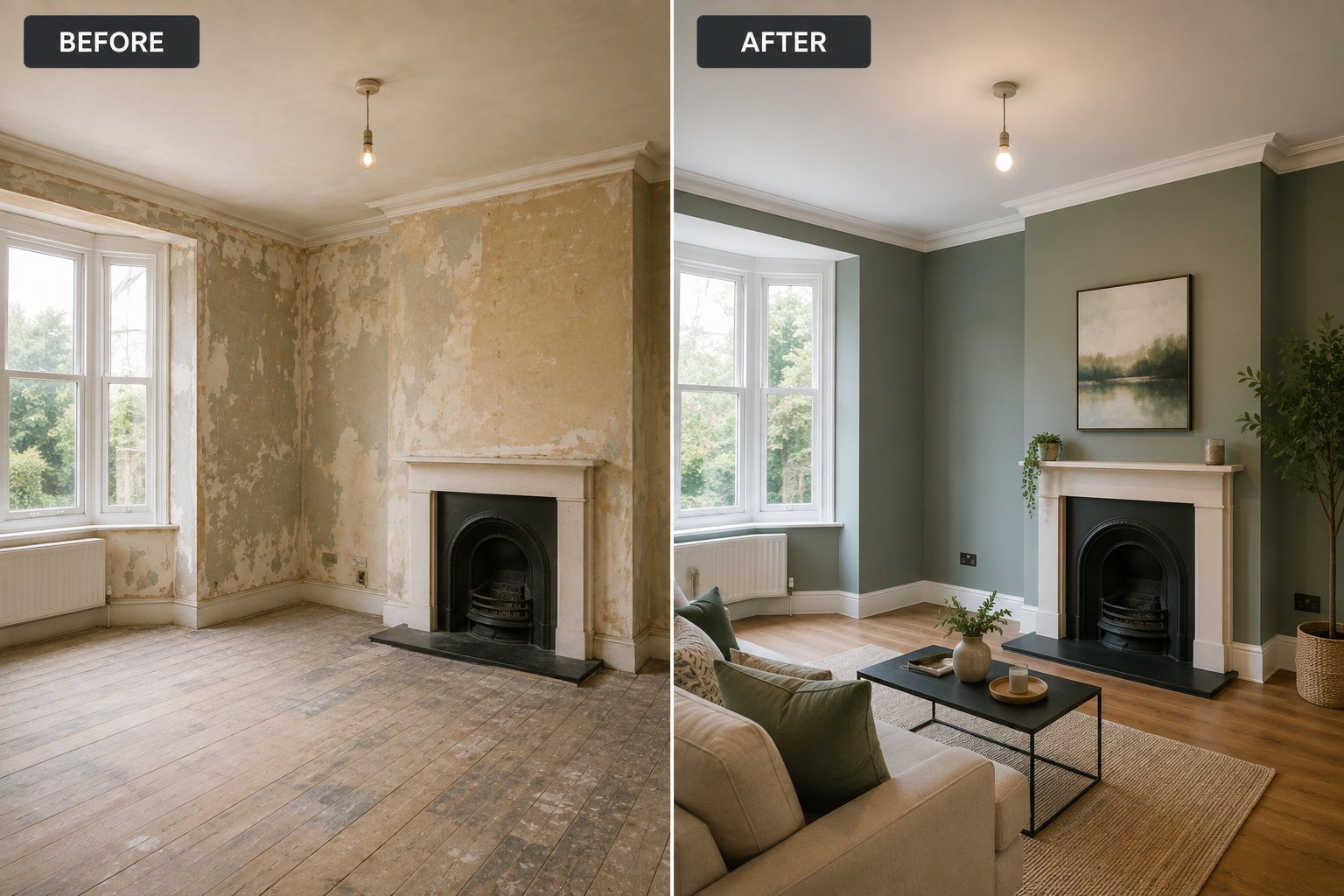
One of the best ways to convince potential customers to choose your business is to show them the quality of your work. Real photographs give visitors confidence that you're experienced and proud of what you do. They also help your website stand out from competitors who rely on generic stock images.
Before and after photos are especially effective for decorators, landscapers, builders, cleaners, kitchen fitters and many other trades. They demonstrate the transformation you've achieved and allow customers to imagine what you could do for their own property. Updating your gallery regularly with recent projects also shows that your business is active and trusted by local customers.
9. Answer common questions with an FAQ
Most customers ask the same questions before deciding to contact a business. They want to know whether you provide free quotations, which areas you cover, whether you're insured or how quickly you can complete the work. If your website answers these questions in advance, visitors are far more likely to get in touch.
An FAQ section saves time for both you and your customers. It reduces the number of repetitive enquiries you receive while helping visitors find the information they need without having to phone or send an email. It also demonstrates that you understand the concerns customers typically have before hiring a tradesperson.
Well-written FAQs can also improve your website's visibility on Google because they naturally include the questions people search for online. Combined with clear service pages and local SEO, they become another valuable part of your website.
10. Optimise your website for local SEO
A great-looking website won't generate many enquiries if nobody can find it. Local SEO helps your website appear when people search for services such as 'plumber in Stafford' or 'electrician near me'. By optimising your content for the locations and services you provide, you increase your chances of attracting customers who are ready to hire someone.
Good local SEO involves much more than adding a few keywords. Fast loading pages, clear headings, properly structured content, relevant page titles and links between related pages all help search engines understand your website. Combined with a complete Google Business Profile, these improvements can significantly increase your visibility.
Every website I build includes SEO foundations from day one rather than treating optimisation as an afterthought. If you'd like to learn more, take a look at our SEO services and discover how I help sole traders improve their visibility online.
| Without Local SEO | With Local SEO |
|---|---|
| Harder to appear in Google searches | Better visibility for local searches |
| Relies mostly on recommendations | Brings in customers searching online |
| Fewer enquiries from new customers | More opportunities to generate enquiries |
| Service areas aren't clearly understood | Google understands where you work |
| Pages may be difficult for search engines to understand | Well-structured pages improve indexing |
| Limited long-term growth | Builds stronger visibility over time |
11. Use clear calls to action
After reading your website, visitors should never be left wondering what to do next. Every important page should encourage them to take a simple action, whether that's requesting a quote, calling you, completing a contact form or sending an email. Clear calls to action help guide customers through your website and increase the number of enquiries you receive.
Effective calls to action are visible without being intrusive. Rather than hiding your contact details at the bottom of the page, place them throughout your website where visitors naturally expect to find them. Small improvements like these often have a surprisingly positive impact on conversion rates.
12. Keep your website secure and up to date
A professional website isn't something you build once and forget about. Domains need renewing, security certificates must remain valid and software should be kept up to date to ensure everything continues working properly. Regular maintenance helps prevent unexpected problems and keeps your website performing at its best.
Without ongoing maintenance, websites can gradually become slower, outdated or vulnerable to security issues. Broken contact forms, expired certificates or missing updates can all create a poor impression and even cost you potential customers. Looking after your website is just as important as maintaining any other part of your business.
13. Make sure your website can grow with your business
Your business today may look very different in a year's time. You might expand into new areas, introduce additional services, employ staff or build an impressive portfolio of completed projects. Your website should be able to grow alongside your business rather than limiting what you can achieve.
Adding new pages, customer reviews, before and after galleries or seasonal services should be straightforward. A flexible website allows you to keep your content up to date, helping both your customers and Google see that your business is active and continually improving.
Every website I build is designed with future growth in mind. Whether you need extra pages, new functionality or integration with the Job Management Portal, your website can evolve as your business develops.
14. Clear pricing or an easy way to request a quote
One of the biggest reasons visitors leave a website is because they don't know what to do next. While you don't always need to display exact prices, giving customers an idea of your pricing or making it simple to request a free quote removes uncertainty and encourages them to get in touch.
Some trades prefer to show 'Prices from…', while others simply offer free, no-obligation quotations. Either approach works well, as long as visitors understand what to expect and can contact you without searching for your phone number or email address.
15. Introduce yourself and your business
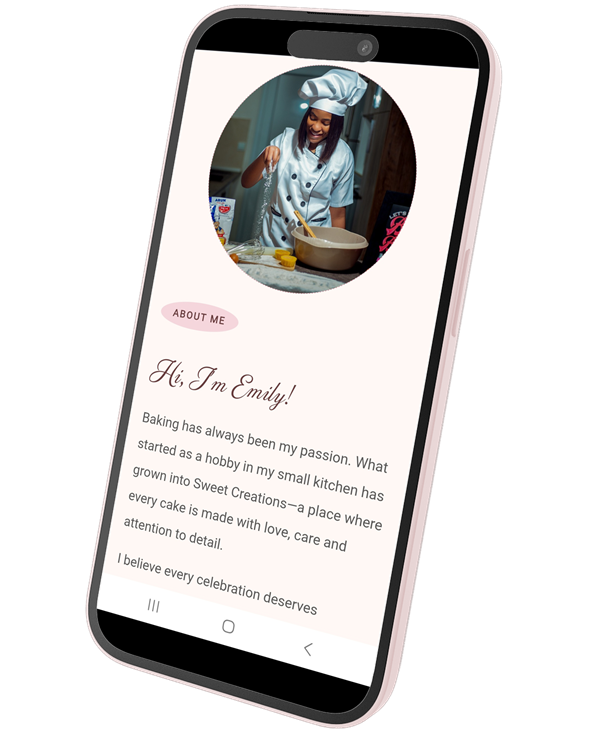
People don't just hire a business - they hire the person behind it. A dedicated 'About Me' page or section helps potential customers get to know who they'll be inviting into their home. Sharing your experience, qualifications and the story behind your business makes your website feel more personal and trustworthy.
Include a friendly photo of yourself, explain how long you've been in business and mention what you enjoy about your work. You don't need to write your life story, but a genuine introduction can help visitors feel more comfortable contacting you. Customers are much more likely to trust a real person than a business that feels anonymous.
Ready for a website that works as hard as you do?
A successful sole trader website is much more than an online brochure. It should help customers find your business, build confidence in your services and make it simple for people to get in touch. Every feature in this guide plays a part in turning visitors into enquiries and enquiries into paying customers.
When these features work together - clear messaging, mobile-friendly design, local SEO, customer reviews, before and after galleries, fast loading pages and strong calls to action - you create a website that supports your business every day, even while you're busy on the job.
All of my website templates include these essential features as standard and are designed specifically for UK sole traders and small businesses. Every website is built with performance, usability and local SEO in mind, helping you create a professional online presence from day one.
If you're looking for a completely bespoke solution, I also create custom website designs tailored to your business. You can compare my website packages and maintenance plans to find the option that suits you best.
Whether you're launching your first website or replacing an outdated one, I'd be delighted to help you build a website that looks professional, performs well on Google and helps your business win more customers. Get in touch to discuss your project.
How I can help
| Feature | How I can help |
|---|---|
| Clear headline | Every website template includes customer-focused headings that clearly explain what you do. |
| Mobile-friendly design | Every website is fully responsive and designed to look great on phones, tablets and desktops. |
| Fast loading pages | I build lightweight websites with performance in mind to provide a fast experience for visitors and Google. |
| Trust signals | Dedicated sections for customer reviews, qualifications, guarantees and other trust-building content are included. |
| Easy contact options | Professional contact forms, click-to-call buttons and simple enquiry options help you win more customers. |
| Service pages | I organise your services so both customers and Google can easily understand what you offer. |
| Local SEO | Every website includes strong SEO foundations, and you can also learn more about my SEO services. |
| Before & after gallery | Showcase your best work with attractive image galleries that are easy to update. |
| FAQ section | I'll work with you to create an FAQ tailored to your business to answer common customer questions. |
| Easy quote requests | Every page is designed to encourage visitors to request a quote or get in touch. |
| About Me section | I'll create a professional About Me section that introduces you, highlights your experience and helps customers feel confident choosing you over your competitors. |
| Website maintenance | Choose one of my maintenance plans and I'll take care of updates, security and backups. |
| Business management | Connect your website with the Job Management Portal to organise enquiries, customers and jobs. |
| Custom website | Need something unique? I also create bespoke websites for UK trades and sole traders. |
Frequently asked questions
Do I need every feature from day one?
Not necessarily. The most important thing is to launch a professional website with solid foundations. Additional sections and features can always be added as your business grows.
Will these features help my website rank on Google?
Many of these features contribute towards better SEO and a better user experience, but no one can guarantee first place on Google. A fast, well-structured website combined with good content and a complete Google Business Profile gives your business the strongest possible foundation.
How often should I update my website?
It's a good idea to add new projects, customer reviews and updated information whenever your business changes. Keeping your website fresh shows customers that your business is active and gives search engines new content to index.
Will you look after my website?
Yes. When I build your website, I'll look after it for you through one of my ongoing maintenance plans. I'll take care of updates, content and photo changes, backups, security monitoring and technical improvements, keeping your website running smoothly while you concentrate on running your business.